

ERP + eCommerce Integration: How to Automate Orders, Inventory, Shipments and Invoices
Your storefront may be where an order begins, but it is rarely where the entire transaction is processed.
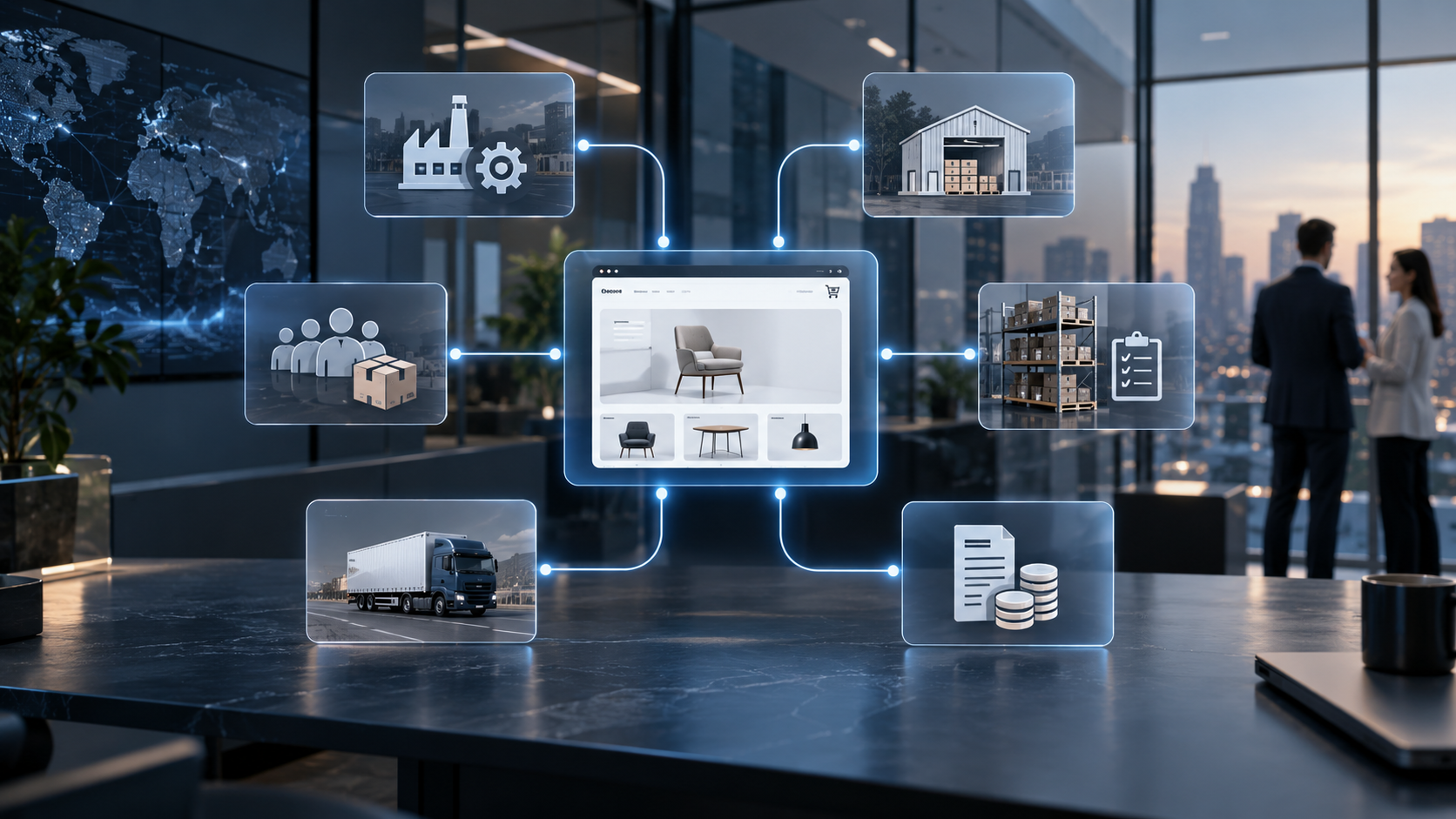
Behind it may sit an ERP, warehouse, distributor, payment provider, tax service and carrier.
The connections between those systems directly affect customer experience.
The Connected Order Lifecycle
A typical flow might be:
Customer → eCommerce → ERP → Warehouse/Distributor → Carrier
Then information returns:
Carrier → ERP → eCommerce → Customer
That exchange can include orders, inventory, pricing, shipments, invoices and credit memos.
Automate Order Entry
Without integration, employees may manually enter online orders into the ERP.
That creates delays, duplicate effort and opportunities for human error.
A properly designed integration allows validated orders to move automatically into downstream systems.
Keep Inventory Accurate
Inventory can exist across multiple warehouses and distributors.
Integration allows Commerce to receive updated availability and apply the company’s business rules before presenting it to customers.
“Available” may mean far more than simply quantity > 0.
Synchronize Customer Pricing
B2B pricing may depend on contracts, customer groups and quantity tiers.
Connecting ERP pricing with the storefront helps ensure customers see the prices they expect.
Return Shipment Information
After fulfillment, tracking information should flow back to the commerce account.
Customers should be able to see shipment status without calling customer service.
APIs, EDI and Other Approaches
Not every system communicates the same way.
Some use APIs.
Many B2B environments still depend heavily on EDI.
Others may use message queues or files.
The goal isn’t to force every connection into the newest technology.
The goal is reliable, observable and maintainable integration.
Design for Failure
Ask before launch:
- What if the ERP is unavailable?
- What if an order is rejected?
- What if inventory changes?
- Can a failed transaction retry safely?
- Who gets notified?
A reliable integration isn’t one that never fails.
It’s one that handles failure predictably.
Integration Is Customer Experience
Customers don’t care which back-end system caused a problem.
Incorrect inventory, missing tracking or wrong pricing is simply a bad customer experience.
Integration architecture is therefore customer-experience architecture.
Connect Your Commerce Ecosystem
Zynovo helps businesses connect eCommerce with ERP, distributor, fulfillment and enterprise systems.